The Atlantic: “The Sophisticated Bigotry of Jindal”

The Atlantic

So let’s imagine a scenario. A devout Christian emigrates from Nigeria to a progressive American college town, where she takes up work as a pharmacist. She quickly finds herself at odds with the dominant culture around her. Co-workers mock her modest dress and her insistence on interrupting work to pray. When she calls homosexuality a sin, they denounce her as a bigot. Ultimately, her employer fires her for refusing to dispense contraception.

Based on his speeches at Liberty University and the Reagan Library, Jindal’s advice to this woman would be clear: Wage “silent war” against the culture that oppresses you, even if you’re a minority of one. If necessary, “establish a separate culture within” the dominant one so you can raise children who fear and obey God.

Now imagine that our devout Nigerian is a Muslim. Suddenly her resistance to the dominant culture makes her not a hero but a menace. Jindal supporters might resist the analogy. Christians, they might argue, don’t kill cartoonists or establish their own separate legal systems. But Jindal’s point in London was that the problems with Muslim immigrants go beyond issues of violence and law. The core danger, he insisted, is their refusal to assimilate into the culture of the countries to which they immigrate. And since Jindal has already declared that American (let alone European) culture is secular, any immigrant who refuses to assimilate into it is, by his definition, a threat. Our Nigerian pharmacist should never been given a visa.
Posted in Daily Links and Notes | Leave a comment

Will the machines be moral?

The Atlantic

Posted in Daily Links and Notes | Leave a comment

Seeking God’s Will Does Not Eliminate Our Choices, but rather can through Gratitude Turn them to Glory

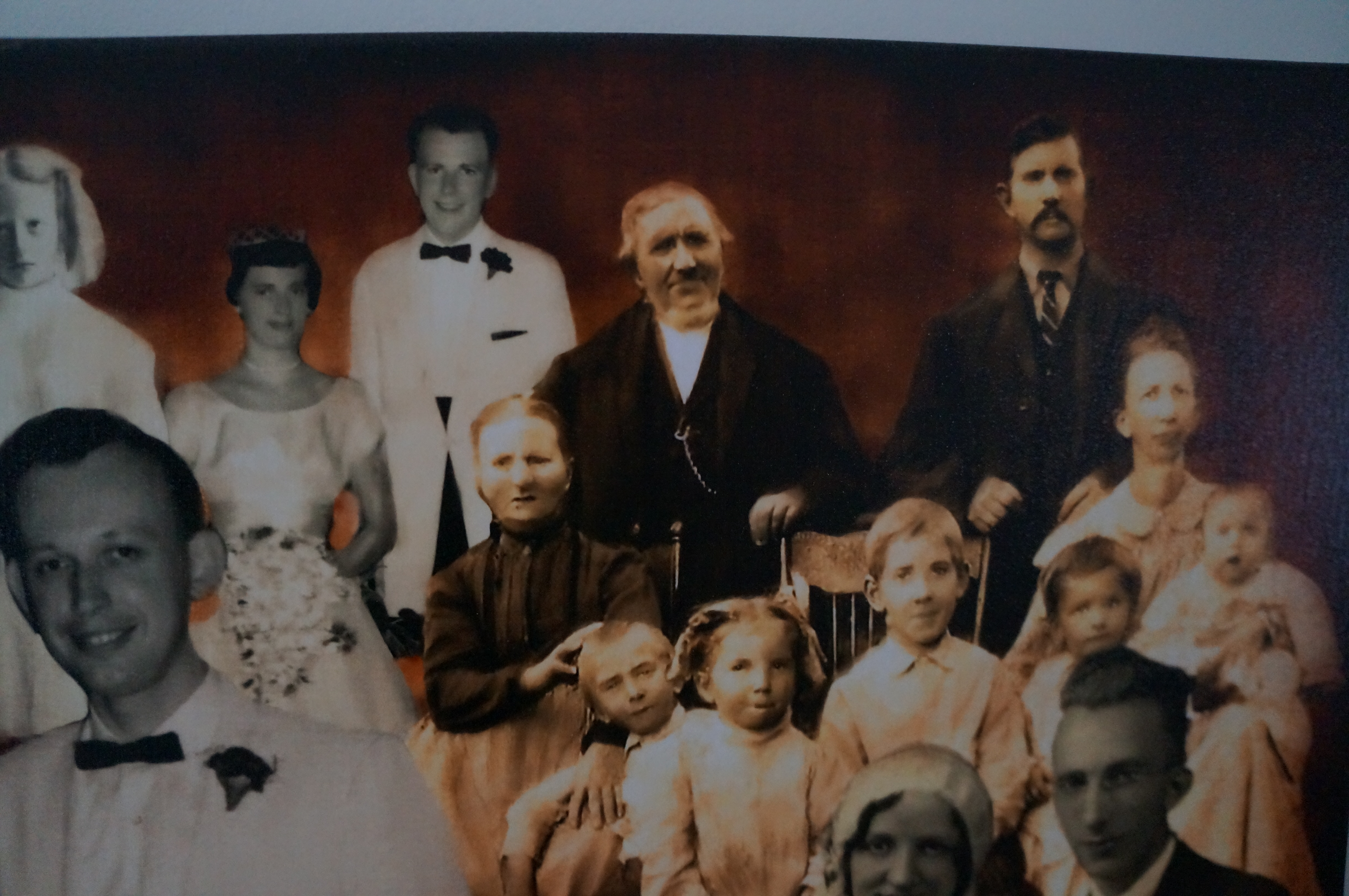
Sake's Family in Spring Lake

Sake’s Family in Spring Lake

The Sons of Marcus Sekkel

Marcus Sekkel, a Jew, was born in 1719. He was born in Loppersum in the province of Groningen and married Leentje Heimans. They had four children, two boys and two girls. The girls kept the Marcus name and both married Jewish men named Mozes. They might have been related to their husbands as they also had names that were connected to the family for generations, Hartog and Ezechiel.

The Jews used the patronymic names system where the family names would just trade places. Marcus Sekkel’s son was Hartog Marcus. I don’t have records beyond Marcus so Hartog was probably a name already in the family. The mother was Heimans so Hartog Markus’ son was Heimen Hartogs. Heimen Hartogs would name one of his sons Hartog Heimans, but we’ll meet him in a couple of paragraphs.

The two sons took on dutch names at some point. Izaak Markus van Berg and Hartog Markus van der Klei. Hartog was born in 1756. Why did these Jewish men take on Dutch sounding last names? Was it the Napoleonic influence? We don’t know. Hartog was a butcher by trade. A kosher butcher probably Izaak, the oldest became a Rabbi but took on van Berg not van der Klei.

Hartog married Sara Jacobs van der Woude

Her parents were Machiels and Benjamins who were Jews too. They would have 8 children.

She was not from Groningen but Nijeholtwolde near Wolvega in Friesland.  Their children would be born there. Did they live with her family? Did he move there to be with her? Why did he move?

The children would grow, marry, take jobs. Their jobs were butchers, merchants and a village policeman. The family names would roll around, Michiel, Hartog, Sekkel, Rachel, Heiman.  All of the children would keep the van der Kley name as maiden or permanent.

Heiman Hartogs van der Klay married Sipkjen Jelles Kelder

The sixth child, Heiman Hartogs van der Klay would be a merchant and marry Sipkjen Jelles Kelder, daughter of a Kelder and a Zwier, not obvious Jewish names and no Jewish genealogies. She was also from Nijeholtwolde.  Did he marry outside the Jews? Was she Frisian? How did this impact the rest of the family? Some of his children married Jews. His youngest son Hartog Heimans did not.

Hartog Heimans it seemed also abandoned the family naming system. All of the children had Dutch names, not Jewish. Sake, his fourth son, would pass on the family names to his first two sons. They had 7 children, one of them stillborn whose name would be given to a subsequent daughter.

Sake came to America

Sake, the fourth son at the age of 19 would take the Rotterdam from the Dutch port of Rotterdam to Ellis Island in 1893. They would alter his name to Vander Klay and when the rest of the family would follow him to America they would follow with the new name.

They lived in Spring Lake Michigan west of Grand Rapids where he would marry Trijnje (Katie) Kuiper from Spring Lake. He made his living as a house painter and painted landscapes for pleasure, many of which have been passed down in the family. They had 6 children together. The first two boys were given family names: Hartog Vander Klay and Heiman Vander Klay but their birth records were burned in a courthouse fire. When they enrolled in elementary school they had no birth certificate to produce, because they were destroyed in fire. The school let them vouch for each other. They would be Harvey and Hiram. The old Jewish names of Hartog and Heimen that had traveled with the family since at least the 18th century would be lost.

Mother Katie would die giving birth to little Katie. A family members who assisted with the birth only tied the cord of the baby, neglecting to tie the cord of the mother resulting in her death.

Hiram would attend Calvin prep school, what was the predecessor to Calvin College and then Calvin Seminary. He would marry Grace from Grand Rapids Michigan. Sake would die in their wedding night. Sake’s father Hartog would outlive him by 5 years.

The Jewish history of the family suppressed. Why? Probably because it was easier to be Dutch than to be Jewish. The fact that Hiram’s name at birth was Heiman, and the importance of that name reaching back generations was only recently recovered. There were rumors of our Jewish ancestry because Hiram once commented “you know if we hadn’t left the Netherlands we would have probably been killed in the Holocaust”. It’s only in the last few years that we discovered the names of our distant relatives who died in Auschwitz and Sobibor. You can see the old Jewish family names in the list: Ezechiel, Heiman, Michiel, Hartog, etc.

Choices bring Life or Death

Why go through all this family history (besides just taking a moment to write some of it down)?

How did the choice of Heiman Hartogs to leave Groningen for Friesland change the future of his family. Was that why they started marrying Gentiles? What did uncle Izaac the Rabbi have to say about this?

How did the choice of his son Hartog Heimans to send his 19 year old son Sake to America change their lives? They would leave the rest of their extended family in Friesland and Groningen to come to America. Why? Family conflict? Economics? That choice would mean life for his ancestors while Hitler would bring death to the ancestors of his siblings and cousins. One little choice and the world is different.

Who was Heiman Hartog’s sister Engeltje. She never married but had two sons when she was 37 and 44 years old! She was a “trades woman, working woman”. Why on earth have children so late with no husband? What was her story? Why make those choices? Her sons had no patronymic name, just the dutch surname. They fall out of the Jewish geneology.

Having to Choose Continue reading →

Posted in On the way to Sunday's sermon | Tagged | 3 Comments

Whitinsville Frisians

Posted in Daily Links and Notes | Leave a comment

Jews among the Dutch and How They Got Last Names

http://themoderatevoice.com/32442/whats-in-a-name-a-dutch-name-that-is/

Posted in Daily Links and Notes | Leave a comment

We are made for another place

such philosophies of Progress or Creative Evolution themselves bear reluctant witness to the truth that our real goal is elsewhere. When they want to convince you that earth is your home, notice how they set about it. They begin by trying to persuade you that earth can be made into heaven, thus giving a sop to your sense of exile in earth as it is. Next, they tell you that this fortunate event is still a good way off in the future, thus giving a sop to your knowledge that the fatherland is not here and now. Finally, lest your longing for the transtemporal should awake and spoil the whole affair, they use any rhetoric that comes to hand to keep out of your mind the recollection that even if all the happiness they promised could come to man on earth, yet still each generation would lose it by death, including the last generation of all, and the whole story would be nothing, not even a story, for ever and ever.

Lewis,  the weight of glory

Posted in Daily Links and Notes | Leave a comment

Most Americans say State Should Not Define Marriage

Lifeway

Posted in Daily Links and Notes | Leave a comment

Alcohol and Sexual Assault on Campus

Posted in Daily Links and Notes | Leave a comment

Religion is Humanity’s Greatest Invention

Smithsonian

The truly unique trait of Sapiens is our ability to create and believe fiction. All other animals use their communication system to describe reality. We use our communication system to create new realities. Of course not all fictions are shared by all humans, but at least one has become universal in our world, and this is money. Dollar bills have absolutely no value except in our collective imagination, but everybody believes in the dollar bill.

Humanity’s greatest invention is religion, which does not mean necessarily mean belief in gods. Rather, religion is any system of norms and values that is founded on a belief in superhuman laws. Some religions, such as Islam, Christianity and Hinduism, believe that these superhuman laws were created by the gods. Other religions, such as Buddhism, Communism and Nazism believed that these superhuman laws are natural laws. Thus Buddhists believe in the natural laws of karma, Nazis argued that their ideology reflected the laws of natural selection, and Communists believe that they follow the natural laws of economics.

No matter whether they believe in divine laws or in natural laws, all religions have exactly the same function: to give stability to human institutions. Without some kind of religion, it is simply impossible to maintain social order. During the modern era religions that believe in divine laws went into eclipse. But religions that believe in natural laws became ever more powerful. In the future, they are likely to become more powerful yet. Silicon Valley, for example, is today a hot-house of new techno-religions, which promise us paradise on earth with the help of new technologies. From a religious perspective, Silicon Valley is the most interesting place in the world.

Posted in Daily Links and Notes | 1 Comment

Auschwitz as seen by Drone,

The shorter version

Posted in Daily Links and Notes | Leave a comment