
Top Posts
- Mabel
- "The Romantic Solution" from Earnest Becker's "The Denial of Death"
- About
- Jonathan Haidt's "Harm"free questions
- Jane Eyre quote used in Tim Keller Sermon
- John Suk preaching from the Lion King
- Assessing Christendom
- YouTube and Podcasts
- Believe in yourself, all the way to hell
- CS Lewis Meditation on the Third Commandment
Category Cloud
Blog note book review book writing CRC Culture commentary Daily Links and Notes Devotional Reflection How to become a Christian Institutional Church Link Compilations Links Missional On the way to Sunday's sermon Pastoral Identity philosophical reflection Quotations Saved Blog Comments Saved CRCVoices Posts Sermon Illustrations Sermon Outline Sermon Recordings Tech tools theological the self Tweets Uncategorized Understanding the Bible Video Wisdom YouTube Comments to RememberTag Cloud
- Abortion
- Acts
- Advent
- Advent 2014
- age of decay
- age to come
- Benedict Option
- book of Leviticus
- Calvin College
- Charles Taylor
- Christianity
- Christmas
- City Church San Francisco
- Confessional conversation
- CS Lewis
- David Brooks
- Donald Trump
- Douthat
- Dreher
- Esther
- Exodus
- faith
- Genesis
- hell
- Inspire2017
- James
- Jesus
- John Suk
- Jonathan Haidt
- Jordan Peterson
- Katy Perry
- Keller
- Kierkegaard
- King David
- King Saul
- Lent
- Leviticus
- Meme of the week
- Moses
- NT Wright
- Palm Sunday
- Pentecost
- Peter Enns
- Peter Kreeft
- Pope Francis
- Progressive Liberationism
- raising of lazarus
- RCA
- reflected self
- relational polarity
- Religion
- resurrection
- Rob Bell
- Rod Dreher
- Ryan Bell
- Skye Jethani
- SSM
- Steve Jobs
- Synod2015
- Synod2016
- the book of exodus
- The Book of Judges
- The book of Kings
- The book of Leviticus
- The Book of Luke
- the book of Numbers
- The Book of Samuel
- the Gospel of John
- The Gospel of Matthew
- The Road to Character
- the self book
- The Ten Commandments
- Tim Keller
- Tom Holland
- transgender
Twitter Feed
Tweets by paulvanderklay
Tolstoy on the meaninglessness of his life
I could give no reasonable meaning to any single action or to my whole life. I was only surprised that I could have avoided understanding this from the very beginning — it has been so long known to all. Today or tomorrow sickness and death will come (they had come already) to those I love or to me; nothing will remain but stench and worms. Sooner or later my affairs, whatever they may be, will be forgotten, and I shall not exist. Then why go on making any effort? … How can man fail to see this? And how go on living ? That is what is surprising! One can only live while one is intoxicated with life ; as soon as one is sober it is impossible not to see that it is all a mere fraud and a stupid fraud! That is precisely what it is: there is nothing either amusing or witty about it, it is simply cruel and stupid.
No matter how often I may be told, “You cannot understand the meaning of life so do not think about it, but live,” I can no longer do it: I have already done it too long. I cannot now help seeing day and night going round and bringing me to death. That is all I see, for that alone is true. All else is false.
Tolstoy, Leo (2013-03-31). A Confession (Kindle Locations 306-308). . Kindle Edition.
Leo Tolstoy’s Apt Description of Blogging
We were all then convinced that it was necessary for us to speak, write, and print as quickly as possible and as much as possible, and that it was all wanted for the good of humanity. And thousands of us, contradicting and abusing one another, all printed and wrote — teaching others. And without noticing that we knew nothing, and that to the simplest of life’s questions: What is good and what is evil? we did not know how to reply, we all talked at the same time, not listening to one another, sometimes seconding and praising one another in order to be seconded and praised in turn, sometimes getting angry with one another — just as in a lunatic asylum.
Tolstoy, Leo (2013-03-31). A Confession (Kindle Locations 155-160). . Kindle Edition.
Tolsoy on a Friend’s Loss of Faith
A Confession
So that, now as formerly, religious doctrine, accepted on trust and supported by external pressure, thaws away gradually under the influence of knowledge and experience of life which conflict with it, and a man very often lives on, imagining that he still holds intact the religious doctrine imparted to him in childhood whereas in fact not a trace of it remains.
S., a clever and truthful man, once told me the story of how he ceased to believe. On a hunting expedition, when he was already twenty-six, he once, at the place where they put up for the night, knelt down in the evening to pray — a habit retained from childhood. His elder brother, who was at the hunt with him, was lying on some hay and watching him. When S. had finished and was settling down for the night, his brother said to him: “So you still do that?”
They said nothing more to one another. But from that day S. ceased to say his prayers or go to church. And now he has not prayed, received communion, or gone to church, for thirty years. And this not because he knows his brother’s convictions and has joined him in them, nor because he has decided anything in his own soul, but simply because the word spoken by his brother was like the push of a finger on a wall that was ready to fall by its own weight. The word only showed that where he thought there was faith, in reality there had long been an empty space, and that therefore the utterance of words and the making of signs of the cross and genuflections while praying were quite senseless actions. Becoming conscious of their senselessness he could not continue them.
Tolstoy, Leo (2013-03-31). A Confession (Kindle Locations 72-78). . Kindle Edition.
Posted in Daily Links and Notes
Leave a comment
On Living in an Atomic Age Great Reading
I saved a bitly link of it with this http://bit.ly/Living_In_An_Atomic_Age
Posted in Daily Links and Notes
Leave a comment
Tim Keller Debate on LIveStream Can Life Have Meaning Without God?
Posted in Daily Links and Notes
Leave a comment
When “Do Unto Others” Meets the Hook-up Culture
The Atlantic and a response
Posted in Daily Links and Notes
1 Comment
Do We Build Wonders for Rain or Wonders for Glory?

Wonder Building
If we were to build the Great Pyramid of Giza today one study suggests it would cost roughly 5 billion dollars. They believe it took nearly 20 years to build and required 4,000 workers to complete it. Estimates today would be that it would take about half the amount of workers and be on a similar scale to the construction of the Hoover Dam or the new World Trade Center in New York City.
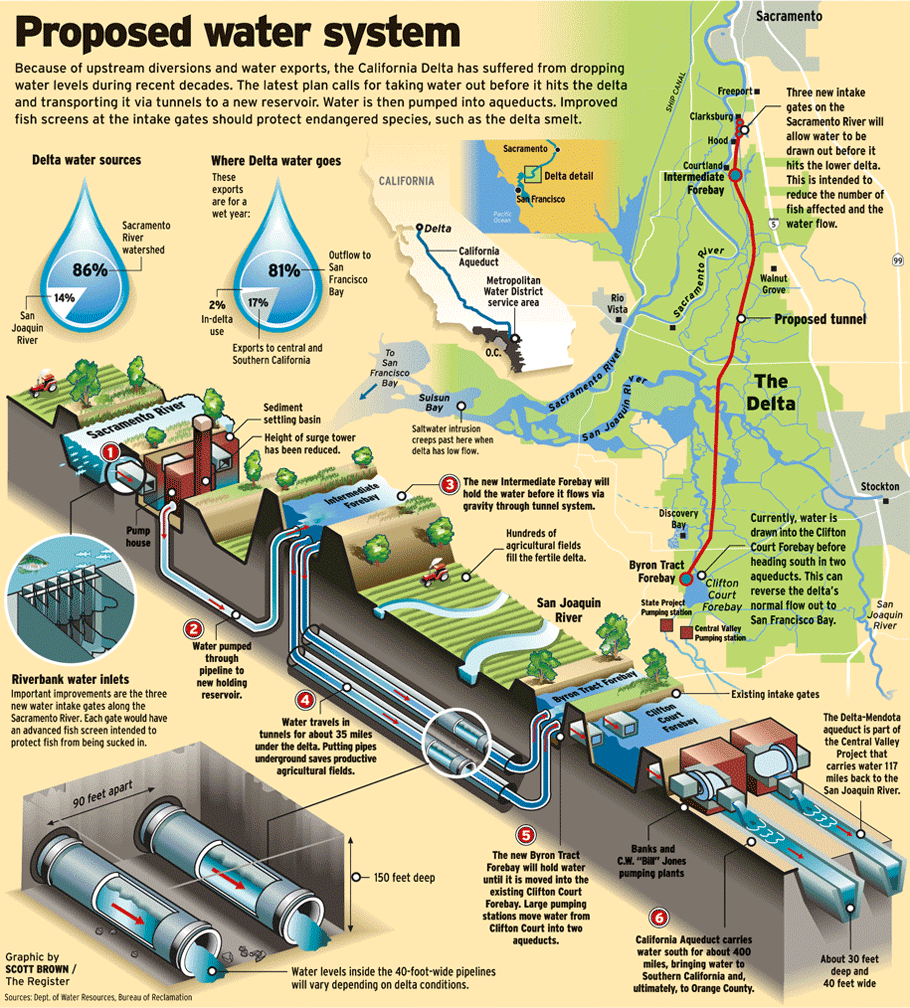
Much closer to home here California is currently conceiving of a 20 billion dollar “wonder” of the Delta Bypass Tunnels that would cost over 25 billion dollars to move divert water from entering the Delta and better quality water to Southern California.
If you compare, however, ancient wonders to modern wonders you might ask about the purpose of these grand monuments. Societies don’t sacrifice and expend huge resources to wonder building unless there is a desired outcome commensurate to the scope of the sacrifice and the size of the project. While we may value the Great Pyramid of Giza as an amazing landmark of antiquity and while it has economic value as a tourist attraction these were not the values that motivated its builder. What motivated the builder of the Great Pyramid and how would we evaluate his motivation today?
To get a sense of this we might ask ourselves under what situation would we today, with vastly more resources than the ancient world had attempt to construct or replicate
- The great pyramids and temples of ancient Egypt
- The great cathedrals of medieval europe
- The great temples of ancient Rome and Greece?
- The great pyramids of Aztecs?
- The great religious statues of Greek, Hindu gods and Buddhas
The closest we come to this is Las Vegas but we quickly see the motivational difference. “Wonders” are built to attract tourists in hopes that they will eat, sleep and gamble thus paying for the thing spectacle.
Modern Wonders Continue reading


What Helped Me Better Understand My Atheist Friends and our Debates about the Meaning of Life
I made a realization yesterday that helped me better understand my atheist friends. When we get debating atheist I kept arguing that they had a meaning deficiency. How can you have meaning in life if you don’t have a dominant meta-narrative that establishes the meaning OF life.
What helped me was reading atheist Jonathan Haidt’s book the Happiness Hypothesis. In the second to last chapter he teases that now after exploring some of the evolutionary mechanism which explain human religion and community he’d tackle the question of the meaning of life. That raised my anticipation. I found the last chapter very intriguing.
He calls “the meaning of life” the “Holy Question”.
He then says that there are two sub-questions beneath it.
He will the go on to say
I see now how I failed to understand my friends. They were asserting the second. I was acting more like a traditionalist, an ancient, someone who assumed that the answer to both questions is available to us and livable. That is the difference.
Contemporary society says “because we can’t arrive at certainty or consensus on the first question it cannot be public, so we shouldn’t treat that in a public way. The answer to the second question seems to be more public, more doable, and also more individual so that’s the level we should pursue.”
I of course don’t wish to give up on the first question and so will continue to pursue it, but I understand my friends better, I think.