
Conversation starts around minute 30. Following Mark John Reynolds on Lupita Nyong’o’s Oscar speech and the follow up. This is a hobby horse for Phil and Skye challenges him.
Conversation starts around minute 30. Following Mark John Reynolds on Lupita Nyong’o’s Oscar speech and the follow up. This is a hobby horse for Phil and Skye challenges him.
Jesus Creed Here’s a list. Click through for details
The point being made in this clip is that the scientific definition of randomness does not imply that something is is open-ended and purposeless. The evolutionary process is an efficient search algorithm optimizing for specific functions. In fact, the evolutionary process follows well defined roads and paths constrained by the nature of chemistry and physics. Not everything is possible, there are a limited number of possible solutions, stable points in biological space. There is no reason to conclude that evolution demonstrates that we are accidents of nature.
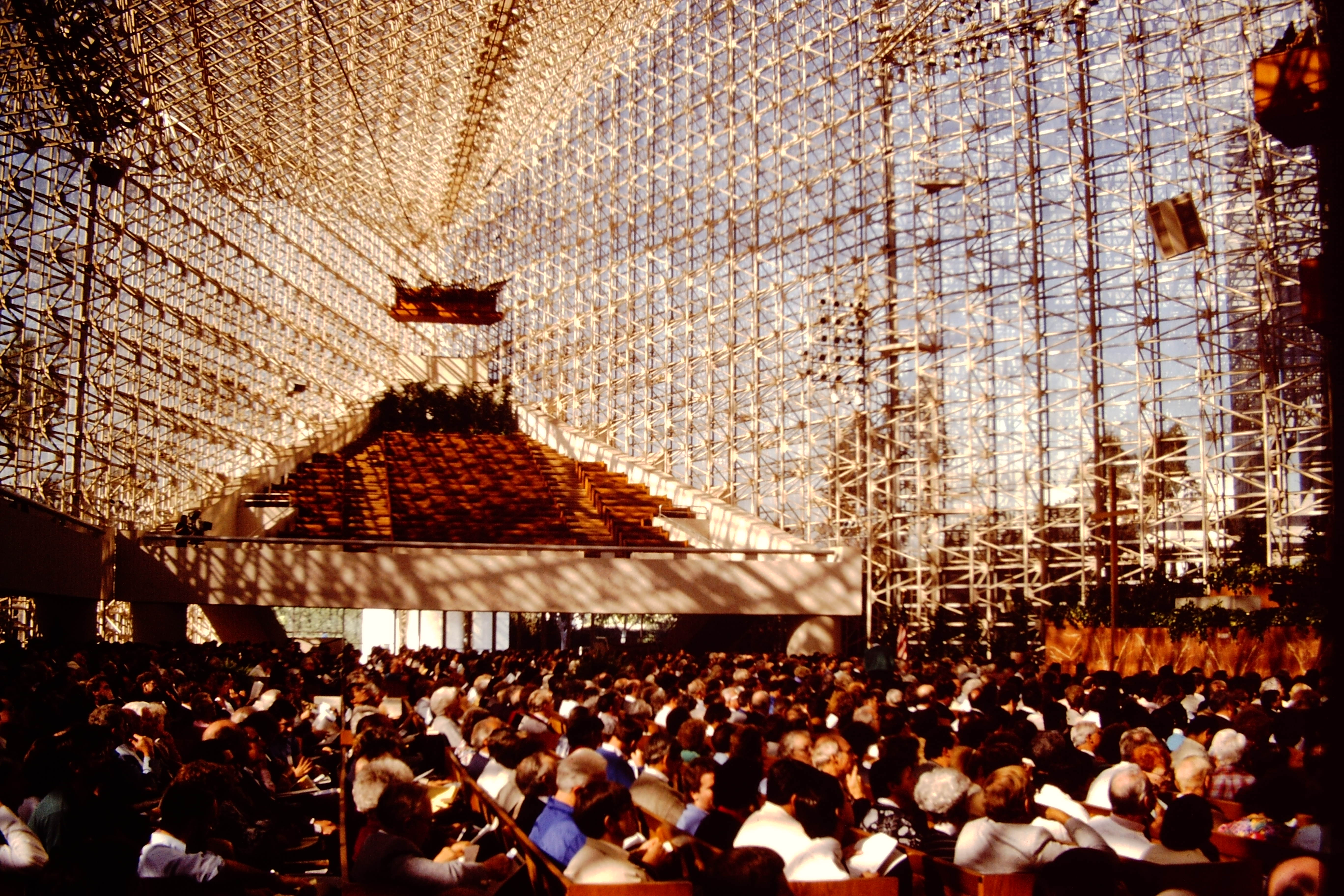 The Science of Church
A piece was recently posted on an admittedly unscientific survey of CRCs that have grown by 20% in the last 5 years. It drew some comments on CRC Voices and other places. I thought it might be good to just reflect on a few things in the light of the inevitable conversation such pieces prompt. This approach has often been called the “church growth” approach. Sometimes it is a associated with business methods, and I’ll get to that association in a bit.
The scientific method continues to have great power in our culture as a means by which we can discover and create community around truth. Should we apply this method to church?
1. It is inevitable. The process is so deeply ingrained in the way we approach the world, we will employ it and it will be employed upon the church from the outside.
2. Why not? We are inquisitive creatures and we will analyse, form opinions and biases about the church. The method just presses us a bit to challenge our biases and communicate with others.
3. We should. If we are to be stewards of the institution we should use our best tools to study it. There is much we can learn with these tools and the application of them can reveal sinful conditions, habits, behaviors and blind spots.
Limitations Continue reading
Dreher, he links to Sullivan and you can retrace back from there.
And Douthat joins in, or rather he started it.
http://standpointmag.co.uk/node/5430/full HT: The Dish
But where do our ideas about the meaning of liberty come from? This is the topic addressed by Larry Siedentop in his erudite and elegantly-written Inventing the Individual. No doubt to the dismay of many, Siedentop’s thesis is that our modern understanding of human agency, and therefore of the liberty of the individual, has its roots deep in the moral intuitions of Christianity. Continue reading

Lisbon Earthquake and Tsunami 1755
The Death of God
Elie Wiesel was born in the same town as Izidor Ruckel’s orphanage. He was a teenager when the Germans rolled into town forty years before the orphanage. They began the process of rounding up the Jews for extermination. Wiesel survived the holocaust, but his belief in God suffered a moral wound.
Never shall I forget that night, the first night in camp, that turned my life into one long night seven times sealed.
Never shall I forget that smoke. Never shall I forget the small faces of the children whose bodies I saw transformed into smoke under a silent sky.
Never shall I forget those flames that consumed my faith forever.
Never shall I forget the nocturnal silence that deprived me for all eternity of the desire to live.
Never shall I forget those moments that murdered my God and my soul and turned my dreams to ashes.
Never shall I forget those things, even were I condemned to live as long as God Himself.
Never.
Wiesel, Elie (2012-02-07). Night . Farrar, Straus and Giroux. Kindle Edition.
The death of God is a “modern” discovery but the anguished complaint about God’s inaction and failure to rescue is ancient. Dip a ladle in the Psalms and you can easily pull up a pleading believer asking for relief and rescue.
Psalm 38:17–22 (NET)
17 For I am about to stumble, and I am in constant pain.
18 Yes, I confess my wrongdoing, and I am concerned about my sins.
19 But those who are my enemies for no reason are numerous; those who hate me without cause outnumber me.
20 They repay me evil for the good I have done; though I have tried to do good to them, they hurl accusations at me.
21 Do not abandon me, O Lord! My God, do not remain far away from me!
22 Hurry and help me, O Lord, my deliverer!
God’s Absence Turns Into God’s Non-Existence Continue reading
That’s why the premier liberal virtue is toleration and not recognition. Toleration is perfectly compatible with — indeed, it presupposes — a lack of unanimity, or even majority consensus, about ultimate goods. It leaves the diversity of views about ultimate goods intact, forcing consensus on as few issues as possible, so that people belonging to specific regions, classes, ethnicities, and sociocultural and religious groups can build rich, meaningful lives together in freedom.
That’s recognition’s goal: to stamp out rival visions of the good when they stand in the way of unconditional acceptance.
And that brings me to the sloppy way the most strident gay-marriage proponents have been throwing around the term “bigotry.” A bigot is someone closed-minded in some respects — someone who evaluates or judges certain groups of people on the basis of prejudice, or pre-judgment, about them, who does not greet all people and ways of life with complete and unbiased openness. Someone, in other words, who does not grant automatic recognition and unconditional affirmation to everyone.


Belief and Evidence
I continue to follow Ryan Bell and his blogging. He’s working his program working to bolster the position he’s been creeping towards by immersing himself in atheist literature.
Within this post he posts an idea I hear regularly.
I find this assertion to be the naïve, contrary to all evidence of human behavior and belief, and full of religious doctrine.
Continue reading →