
Top Posts
- Mabel
- Could Jesus Fly? Will We?
- JBP's Cambridge Fellowship Recinded
- Keller's Quote on the God-Man Suffering by Albert Camus
- Biography of Richard Dawkins
- YouTube and Podcasts
- Douglas Murray Muhammed made me and atheist
- Paul, Conflict and Boredom
- Notes on Isaiah 6:9f
- The Road to Character, Chapter 3, The Eisenhowers plus Sin and Moderation
Category Cloud
Blog note book review book writing CRC Culture commentary Daily Links and Notes Devotional Reflection How to become a Christian Institutional Church Link Compilations Links Missional On the way to Sunday's sermon Pastoral Identity philosophical reflection Quotations Saved Blog Comments Saved CRCVoices Posts Sermon Illustrations Sermon Outline Sermon Recordings Tech tools theological the self Tweets Uncategorized Understanding the Bible Video Wisdom YouTube Comments to RememberTag Cloud
- Abortion
- Acts
- Advent
- Advent 2014
- age of decay
- age to come
- Benedict Option
- book of Leviticus
- Calvin College
- Charles Taylor
- Christianity
- Christmas
- City Church San Francisco
- Confessional conversation
- CS Lewis
- David Brooks
- Donald Trump
- Douthat
- Dreher
- Esther
- Exodus
- faith
- Genesis
- hell
- Inspire2017
- James
- Jesus
- John Suk
- Jonathan Haidt
- Jordan Peterson
- Katy Perry
- Keller
- Kierkegaard
- King David
- King Saul
- Lent
- Leviticus
- Meme of the week
- Moses
- NT Wright
- Palm Sunday
- Pentecost
- Peter Enns
- Peter Kreeft
- Pope Francis
- Progressive Liberationism
- raising of lazarus
- RCA
- reflected self
- relational polarity
- Religion
- resurrection
- Rob Bell
- Rod Dreher
- Ryan Bell
- Skye Jethani
- SSM
- Steve Jobs
- Synod2015
- Synod2016
- the book of exodus
- The Book of Judges
- The book of Kings
- The book of Leviticus
- The Book of Luke
- the book of Numbers
- The Book of Samuel
- the Gospel of John
- The Gospel of Matthew
- The Road to Character
- the self book
- The Ten Commandments
- Tim Keller
- Tom Holland
- transgender
Twitter Feed
Tweets by paulvanderklay
PCUSA Pastor Who Doesn’t Believe in God
The Friendly Atheist kind of like the Icelanders in their new paganism.
Posted in Daily Links and Notes
Leave a comment
John Suk writes about his Cousin Pieter who fought in the Boer War
Posted in Daily Links and Notes
Leave a comment
The Work of the Church in Light of City Church SF’s Letter on Same Sex Couples
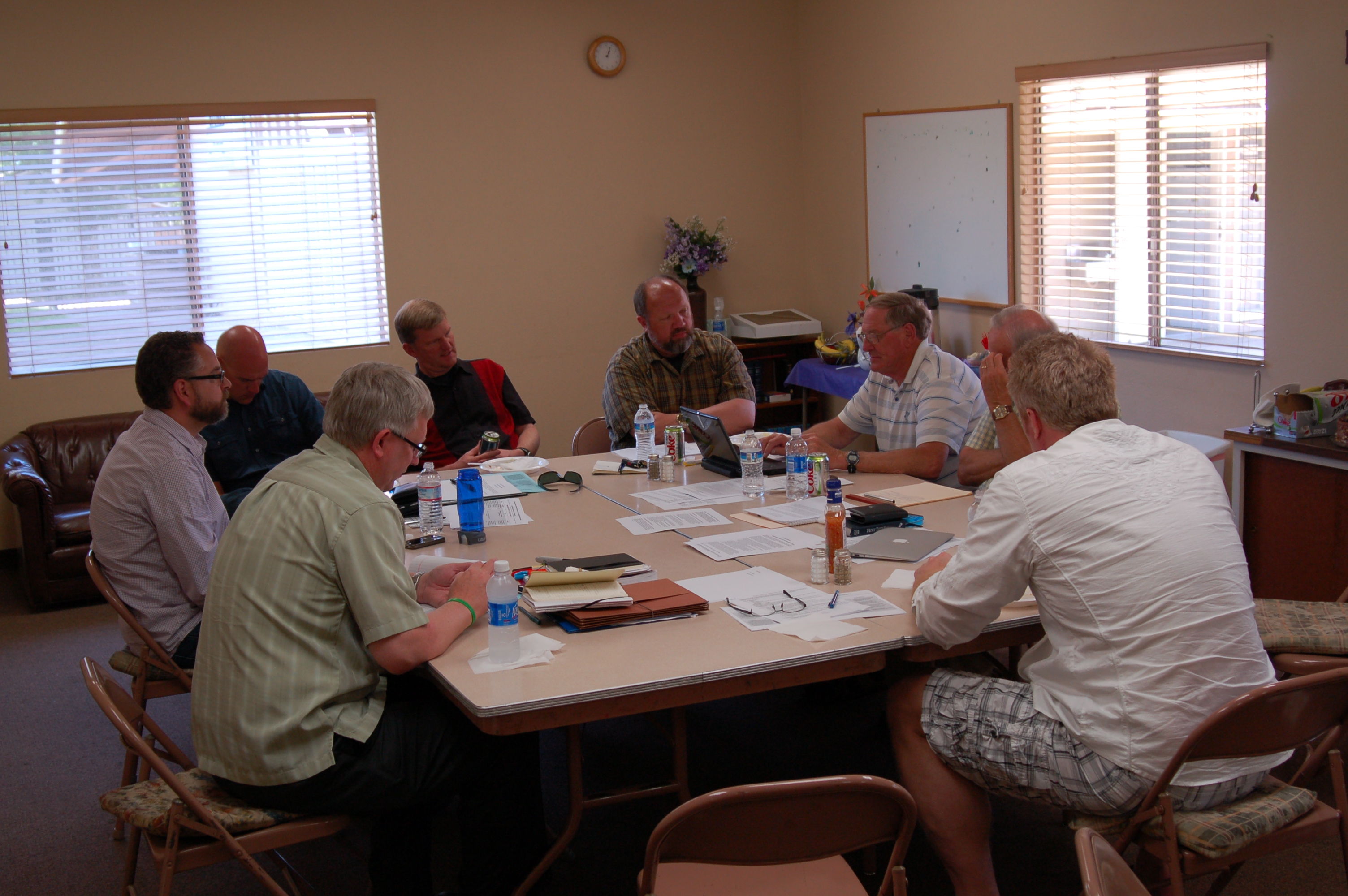
Initial KEZ Meeting May 5 2011
News from City Church San Francisco
Last week Thursday the news about the decision by the Elder Board at City Church San Francisco began to break. I use my blog to track links on stories I want to follow so I’m doing the same with this one.
Relationships Between City Church, the CRC Sacramento Cluster and the Kingdom Enterprise Zone Project
City Church has been an important church in my circles here in Northern California. They were “inspired” by Tim Keller and Redeemer Pres. in NYC. Scot Sherman who now leads the Newbigin House of Studies was an early NYC church planter in Tim Keller’s church planting network was on staff at City Church when we all first got to know each other. City Church has been an important hub of church planting “mojo” in the Bay Area for Reformed church planting. Church planting residents in our Sacramento cluster found their way to City Church to learn from the staff and be mentored by them. City Church could provide to our young leaders the kind of mentoring for church planting in the new City Center ethos that we could not.
City Church San Francisco left the Presbyterian Church of America in 2006 over the PCA’s prohibition from women serving in church offices. They joined the Reformed Church in America and immediately became an important player in the church planting community of that denomination. They were key in founding the RCA’s first non-geographical classis named City Classis. For those of you who like me go way back to the East Coast “Urban Ministry” days the Harvie Conn quote on the front page of the City Classis website does some echo-location on the Presbyterian- Westminster East community and epoch where the likes of Conn, Tim Keller and Roger Greenway laid down a vision for what conservative Reformed could do in the city.
When the Kingdom Enterprise Zone project was established I had the privilege of working with Scot, Chuck De Groat and Mike Hayes as anchor members of our team.
I’m not embarrassed to say that I was envious when they joined the RCA. I would have LOVED to have had them join the CRC. I think highly of these guys and what they’ve accomplished. I say all of this with a smile because I was also happy they joined our RCA cousins and working with them has been a privilege and a growing experience.
When the news broke for me and my circles, it was significant. While I’m working on this today City Classis RCA will be meeting. I’ll be praying for their meetings. Whether or not anything about this will be on their agenda, it will be the elephant in the room and the subject of many meetings that go one in the hallways around the main meeting.
When Pastors Shut Up
When the news broke many people assumed their normal seats in our cyber gallery. The culture warriors have lined up. The affirming team has cheered this new affirmation of “history’s inevitable march” while the conservatives have lamented the apostasy of yet another group and took it as an opportunity to cut and paste their well rehearsed arguments.
The group that probably most needs to talk are the folks in the middle who feel the weight of both sides. This becomes an opportunity to do more processing. This is the work of the church and of its leaders.
At moments like this many pastors, who are usually all too willing to vomit words on their congregational victims, swallow their tongues. They know that what they say in moments like these can be relationally and vocationally consequential. They start keeping their cards close to the vest, measuring their words, reading whatever room they are in to figure out what’s safe to say. They try to figure out how to converse without straining the bonds between them, without threatening the unity of the church, without violating their convictions, their subscriptions, or their consciences. Often for pastors uniquely, these conversations may steer their futures and those of their families. They are wise to be cautious.
But Talk We Must
It is in these moments that all the work we do in creating safe spaces in church is most important. All of our relational skills, all of the things we say to our people about integrity, honesty, and our convictions need to come into play. All of the layers that make up the church are now important and need to be affirmed and engaged. We need each other now and we must leverage the relational and ecclesiastical capital that we have been amassing in the mundane, dull, perfunctory and impromptu fellowshipping we have done before.
The Work of the Church
When a friend first sent me the link of the open letter from the CCSF Elder Board I groaned. In the early 20th century my grandmother’s family was ruptured over the PRC/common grace split. My parents and my father’s church was active in the CRC fight over Women in Church Office (WICO). When this news broke it was as if you can now hear with your ears the first explosions of the coming battles. Sure, I know plenty of soldiers and refugees in the ongoing war but when you realize that fighting will come to your home the emotions are different.
If I pull my old, dry Williston Walker Church History text from my seminary days off my shelf I should be reminded that this is part of the work of the church. Walker’s approach to church history invites us to imagine that our history often looks like one battle after another. It of course started very early with Judaisers vs the new Gentile church over circumcision, dietary regulations, participation in pagan temples, etc. It soon moved on to Arianism, Gnosticism, Manichaiesm , the Donatist controversy, and so forth, through the Protestant Reformation and beyond.
While I think Walker’s view of church history is a bit skewed, he does have a point. The church is defined by moving forward through conflict. We too often find orthodoxy and orthopraxy by living in its opposite as Alister McGrath nicely illustrates in his little book entitled Heresy. We each experiment with this individually in our own heads and our sinful lives but we also get a chance to play a part in this through the church. More often than not the church finds the path by whole groups of us running off of it. Many of us fervently pray “Lord, lead me in right paths and make my way straight” but in the moment when we look around we see a lot of trees and hear voices squabbling and arguing, many of us all too ready to call others to follow down the path we are sure of.
The LORD Of History
When I get into the woods and darkness starts to fall I often find myself bottom lining. There are plenty of other voices that will say “you silly Christians with your churches, your Bibles, your theological books and conversations, can’t you see how history is heading?!”
I say “no, and I’m not really convinced you know either.”
I have learned that at some point when you’re in for a penny you’re in for a pound. Is my Jesus sitting at the right hand of the Father? Has he at outrageous cost and anguish redeemed our race and founded his church? Is he not only the LORD of history but also the church, though she be rent asunder and too often look like a band of misfits looking for the right path through the woods? Yes. I will keep seeking him even as I trip over roots and wonder about where my friends are going.
So we must do our work. We must talk. We must speak our minds and listen carefully to one another. We must keep doing the hard work of praying and reading the scriptures, debating the points and listening to present and past theologians. We must do our social work and our pastoral care. We must do our scientific work and engage our culture. We must go to Classis and Synod and talk to our Roman Catholic and Orthodox friends as well as our liberal and pagan ones. We must do the same work as Paul of Tarsus as he tried to lead infant Christian churches through the morass of Greco-Roman culture and the Diaspora synagogue experience.
I’ll probably write more about my thoughts on this subject specifically. I don’t want to be a mute weenie pastor whose priority is finding the safe group to be in for my career or imagined reputation. I do want this, however, to be my first word and perhaps the most important. My thoughts will be, as all of my thoughts are, representative of me today, subject possibly to change for the better or the worse. We do need each other and it is for times when we might feel lost in the woods or perhaps certain of the path while other doubt, that we need each other most.
I will pray for my friends at City Church, Newbigin House, and many other warriors, refugees and on-lookers as we travel this path together.


On Sharing Information, Politicking and Family Conversations
A comment from my Facebook conversation in response to the Christ Church SF posting.
For the sake of argument let’s assume the traditional position for this analogy. Imagine your young adult child is arrested for stealing. You know you’re raised your child not to steal. You know your child knows that stealing is wrong, yet your neighbor feels the need after reading the police notes in the paper to stop by the house and ask you “stealing is wrong! Why don’t you just tell your child stealing is wrong. Just make it clear to them by telling them, nagging, them, threatening to cast them from your home, refusing to have them over for Thanksgiving.”
Now you’ve got a few things on your hand. Your child was caught stealing, this is your primary concern. You’re concerned for your child. You love our child. You know that your child knows how you feel. The situation in question is hardly a matter of information. The established norms were commonly known, yet something has happened. There are multiple other factors in your child’s life, their sense of self, their friends, their story, how they spend their time, where the child lives, etc. You know all these things.
You’ve also got your neighbor and their Facebook friends that keep sending you messages about how stealing is wrong. What begins to dawn on you is that the repeated messages probably have little to do with you and your child, but more to do with the need of the sender to broadcast a message. You begin to realize that the matter at hand is less about your son and more about a broader conversation going on in the culture.
Very quickly we figure out that all of this chatter really isn’t a question if “informing”, it’s more a question of the practice of influence and democracy. If we keep repeating a message again and again, and leverage our personal influence maybe it will be believed and reinforced.
Now this practice isn’t a bad thing. We should talk about things and it is legitimate to weigh and and share with others what you think. There is, however, an irony in this, because it we are by our practice then putting our faith in a sociology of knowledge process and seeking to legitimate a position upon that basis, and not upon the bases of the authority that was initially appealed to.
For the parent of the child arrested for stealing, the politicking of course feels different. The parent of course isn’t unbiased either.
The important thing to take away from this little story for me is the realization of what we are doing when we’re doing it.
Now let’s imagine the parent is talking to the adult child and the neighbor keeps knocking on the window and says “stealing is wrong!” Maybe they organize the neighborhood, make signs, and hold an event. The parent would probably say “You’re not being helpful in my relationship with my child.” Is that parent then soft on stealing?
We can of course flip the script on this little story. Both sides have lots of arguments, appeals to different stories, authorities, and means of validation. What I hope we can see is that we’re “_________ is wrong? Are you unclear, let me make you a sign!”
Social pressure on both sides (of which there is plenty, with both sides playing the victim) abounds. Go ahead and make your sign. You can invest in this sociology of knowledge operation. It works. It’s effective. It isn’t a specifically Christian or loving thing to do. It’s just what it is.
The church has to have something more similar to the family conversation.
Now as you said Mike, families sometimes put someone out. Families sometimes break up. These are always losses and the Apostle Paul knows this and talks about it in serious terms. Plenty of this happens all the time. Paul also sees even those extreme cases as part of a longer process and the process doesn’t look a lot like sign carrying activism.
So we can do the sign thing, but I’m more interested in the family conversation.