
Top Posts
Category Cloud
Blog note book review book writing CRC Culture commentary Daily Links and Notes Devotional Reflection How to become a Christian Institutional Church Link Compilations Links Missional On the way to Sunday's sermon Pastoral Identity philosophical reflection Quotations Saved Blog Comments Saved CRCVoices Posts Sermon Illustrations Sermon Outline Sermon Recordings Tech tools theological the self Tweets Uncategorized Understanding the Bible Video Wisdom YouTube Comments to RememberTag Cloud
- Abortion
- Acts
- Advent
- Advent 2014
- age of decay
- age to come
- Benedict Option
- book of Leviticus
- Calvin College
- Charles Taylor
- Christianity
- Christmas
- City Church San Francisco
- Confessional conversation
- CS Lewis
- David Brooks
- Donald Trump
- Douthat
- Dreher
- Esther
- Exodus
- faith
- Genesis
- hell
- Inspire2017
- James
- Jesus
- John Suk
- Jonathan Haidt
- Jordan Peterson
- Katy Perry
- Keller
- Kierkegaard
- King David
- King Saul
- Lent
- Leviticus
- Meme of the week
- Moses
- NT Wright
- Palm Sunday
- Pentecost
- Peter Enns
- Peter Kreeft
- Pope Francis
- Progressive Liberationism
- raising of lazarus
- RCA
- reflected self
- relational polarity
- Religion
- resurrection
- Rob Bell
- Rod Dreher
- Ryan Bell
- Skye Jethani
- SSM
- Steve Jobs
- Synod2015
- Synod2016
- the book of exodus
- The Book of Judges
- The book of Kings
- The book of Leviticus
- The Book of Luke
- the book of Numbers
- The Book of Samuel
- the Gospel of John
- The Gospel of Matthew
- The Road to Character
- the self book
- The Ten Commandments
- Tim Keller
- Tom Holland
- transgender
Twitter Feed
Tweets by paulvanderklay
State of personal discipleship in RCC, prescribe catechesis
Posted in Daily Links and Notes
Leave a comment
Plantations, Colonialists, and the Innocents who wander there
When Whitey Moves
I’ve been playing “wanna read it, don’t wanna read it” with Christena Cleveland’s piece on “Urban Church Planting/Plantations” It’s easy for me to retweet or “share” on something that with a minute’s reading I think “yeah, that’s right…” This piece for me was more complicated because it touches deeply on my own story.
I lived through the urban ministry movements of the 60s and 70s. I was a white foreign missionary who didn’t know anything in the 90s, and I have now pastored a small, multi-ethnic congregation in a struggling South Sacramento neighborhood for 17 years. I’ve watched white flight to the suburbs, seen plenty of white-missions-projects overseas and to the inner city jn America, and now watch the ongoing “Friends-ification” of the city center again. When Whitey moves or gets a notion, everybody else has got to adjust and not always for the better. Yeah, I get that.
Babe in the Woods
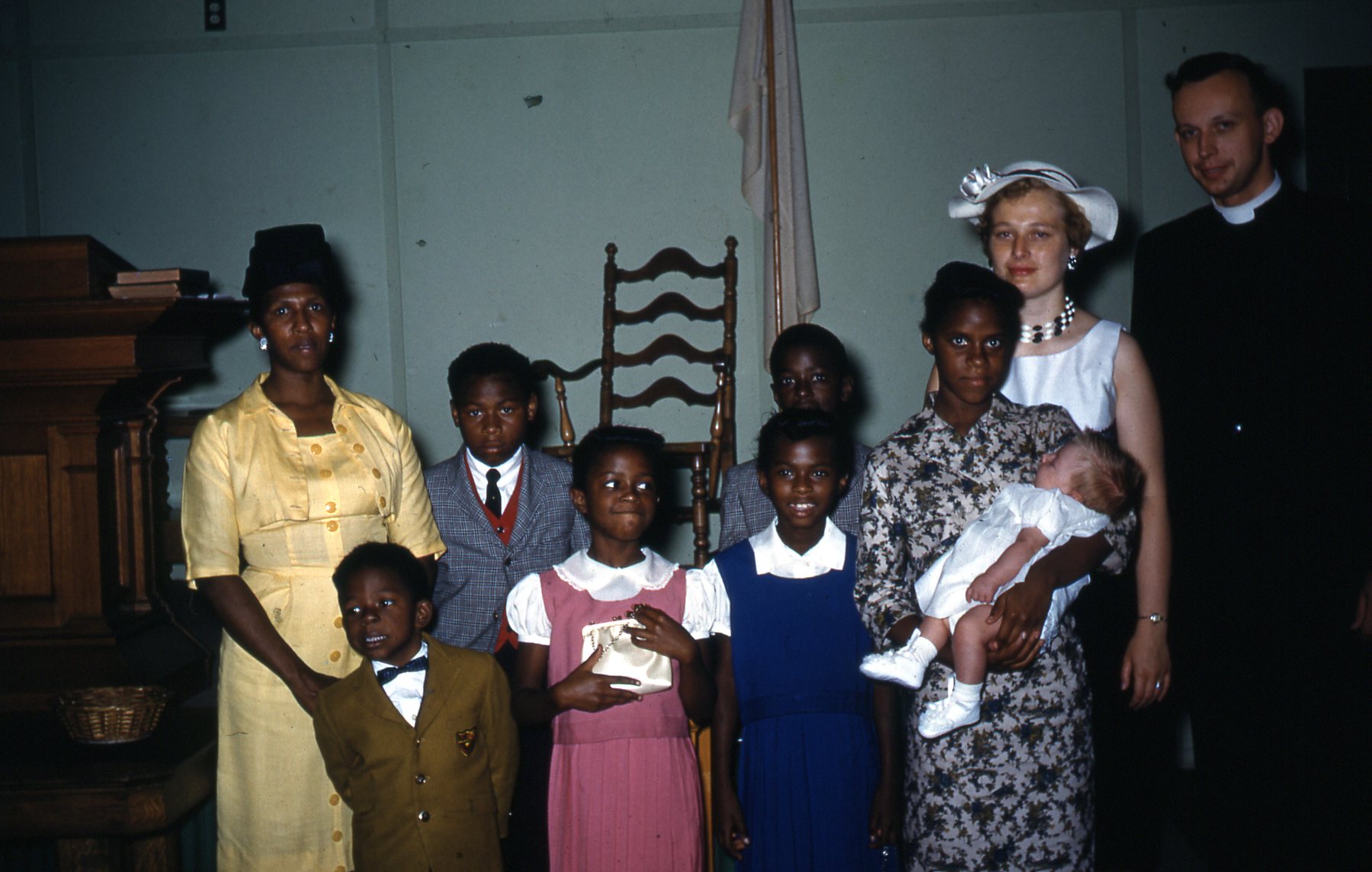
My father, pictured above, would have been 79 today if he were alive. He came to Paterson New Jersey to turn a “mission” into a church in 1960. He told his own story in his memoir Chains of Grace.
In many ways when he and his new bride (and coming children) moved into the struggling First Ward of Paterson he was spectacularly ill prepared for ministry there. He was raised in Christian Reformed Church parsonages during the depression and World War 2 all over the American prairie as his father ministered mostly to small agricultural Dutch immigrant communities. He was educated at lilly white (or wooden-shoe-dutch) Calvin College and Calvin Seminary and had very little exposure to the African American community.
He spent 36 years loving and learning to serve that community. In his book you can find plenty of confession, ways that he sometimes did more harm than good, but if anyone wants to hear the credentials of his work you should talk to those who knew him, knew his work, knew his heart and ask them if Paterson would have been better if he had never come.
When I reflected upon his life last year in preparation for his eulogy I wondered how he was able to serve given his lack of preparation. The conclusion I came to was his heart. He was without guile. He did not come to be served, but to serve. Even while there was nothing hip or cool about him, people who knew him could sense that he genuinely loved them and cared for their welfare. They could tell that he was there to live out “your well-being at my expense” and that was what he did.
He made up for his initial lack of understanding of African American culture with a desire to serve and to love and in time he learned and his service was perfected by that learning.
The Heart of All Ministry
I very much agree with what I understand to be the heart of Ms. Cleveland’s piece.
I’m amazed at how quickly majority-culture pastors with no urban ministry experience acquire a passion for urban ministry and then automatically assume that they are qualified for the job. Last fall, I attended an urban and multicultural church planting conference that gathered national church planting leaders from over 30 denominations. As I looked out over the room, I couldn’t help but notice that the group was about 95% white (and 99% male!).
When I asked the group how they figured that a group of white men could possibly be equipped to lead urban church planting movements among non-white and other oppressed folks, the room got really quiet. No one had a good answer. Indeed, it seemed as if they had never reflected on this question before.
Privilege says I’m called and equipped to minister to all people (but minorities are only called and equipped to minister to people who are just like them). Privilege says that the largest ministry with the most resources is the most effective ministry.
I have seen and lived this from both sides. I saw many well-intentioned but naive “missionaries” come to the inner-city only to do more harm than good, to offend the people they said they wanted to serve, to create relationships of unhealthy dependency and to actually reinforce racist stereotypes and biases on both sides. Yep. Happens every day.
I’ve also lived that life. I was a young, well-intentioned but naive pastor who went to the Dominican Republic to try to help and serve the Haitian pastors living and working in the DR. I too was in many ways spectacularly unprepared to be of any earthly or heavenly good to those fine people. I hope in the long run my sojourn there did more good than harm but I don’t really know. I certainly benefited greatly from the experience, but did they?
I learned on Twitter that Augustine said the three most important factors in the spiritual life are “humility, humility, humility” and I think he was right.
If I have to chose a missionary who is prepared with learning, or a missionary who is humble, I’ll take the humble one. Why? Because all preparation as we do it tends to be theoretical, abstract and approximate but humility enables the missionary to learn from the specific context and specific people they are called to serve.
Ms. Cleveland calls for mentoring which is good, but if you have a mentor without humility your mentor will probably be of little use. Humility is the key. Continue reading
Leaders and Empathy
Skye Jethani Leaders make the worst sinners, but sinners make the best leaders.
Posted in Daily Links and Notes
Leave a comment
Gospel and response
The “gospel” (as the Bible uses the word) is not a “how-to” concept expressed in the form of a conditional sentence (i.e. “If . . . then . . .”).
Instead, it is a declaration that implies a command.
The gospel is a declaration of Jesus’ kingship, implying a summons to allegiance.
Posted in Daily Links and Notes
Leave a comment


