

Top Posts
- Miroslav Volf on God's violence or ours
- TLC (This Little Corner) Starter's Kit
- Online Estuary Meeting of TLC All Stars
- Conservative Christian Pessimism
- Annie Dillard Quote on Crash Helmets needed for worship
- teachers who sexually abuse children still find classroom jobs
- John Calvin on Jacob Wrestling with God
- Tim Keller: "Our Call: Holy Living"
- Follow the Liberals if you want to destroy your church
- It isn't power that creates authority
Category Cloud
Blog note book review book writing CRC Culture commentary Daily Links and Notes Devotional Reflection How to become a Christian Institutional Church Link Compilations Links Missional On the way to Sunday's sermon Pastoral Identity philosophical reflection Quotations Saved Blog Comments Saved CRCVoices Posts Sermon Illustrations Sermon Outline Sermon Recordings Tech tools theological the self Tweets Uncategorized Understanding the Bible Video Wisdom YouTube Comments to RememberTag Cloud
- Abortion
- Acts
- Advent
- Advent 2014
- age of decay
- age to come
- Benedict Option
- book of Leviticus
- Calvin College
- Charles Taylor
- Christianity
- Christmas
- City Church San Francisco
- Confessional conversation
- CS Lewis
- David Brooks
- Donald Trump
- Douthat
- Dreher
- Esther
- Exodus
- faith
- Genesis
- hell
- Inspire2017
- James
- Jesus
- John Suk
- Jonathan Haidt
- Jordan Peterson
- Katy Perry
- Keller
- Kierkegaard
- King David
- King Saul
- Lent
- Leviticus
- Meme of the week
- Moses
- NT Wright
- Palm Sunday
- Pentecost
- Peter Enns
- Peter Kreeft
- Pope Francis
- Progressive Liberationism
- raising of lazarus
- RCA
- reflected self
- relational polarity
- Religion
- resurrection
- Rob Bell
- Rod Dreher
- Ryan Bell
- Skye Jethani
- SSM
- Steve Jobs
- Synod2015
- Synod2016
- the book of exodus
- The Book of Judges
- The book of Kings
- The book of Leviticus
- The Book of Luke
- the book of Numbers
- The Book of Samuel
- the Gospel of John
- The Gospel of Matthew
- The Road to Character
- the self book
- The Ten Commandments
- Tim Keller
- Tom Holland
- transgender
Twitter Feed
Tweets by paulvanderklay
When the Trees Look for a King
Religion that works and if we were God
We’ve been talking about what we mean when we talk about “religion that works“. We look for God to give us what we ask for in our prayers and to shape the world according to our needs and desires. We’ve also talked about the common complaint that “If I were god I would run this world right!” We’re sure that we would meet out more happiness, justice and beneficence that we currently see and we’d all be a lot happier. This week in Judges we get a peak at reality. How we actually work, what we actually do, and how it usually turns out.
Religion and Politics
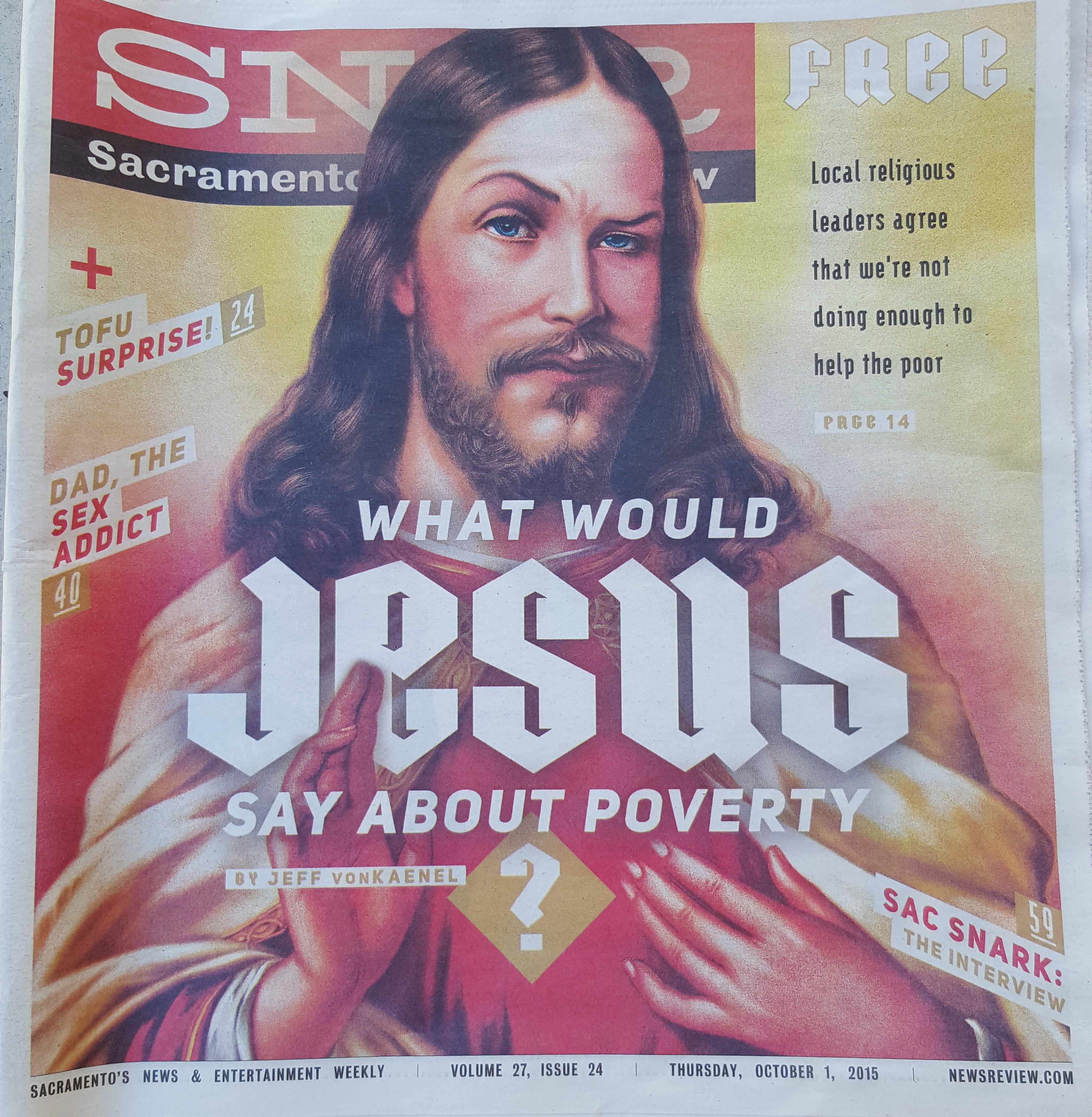
We also saw last week how when you ask people on the street a question like “what would Jesus say about poverty” many respondents immediately jumped to politics. This conversation about us and God has a lot to do with politics and the book of Judges is a very political book. It is a critique about what we do with power and how we are.
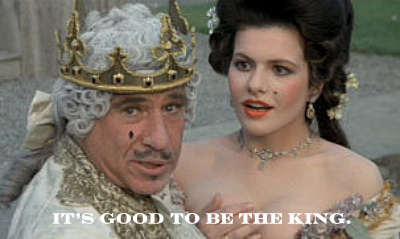
Last week we met Gideon. God found him humiliatingly threshing grain in his winepress for fear the Midianites would steal his food just as they had killed his brothers and were oppressing Israel. God through many signs and wonders raised him up to deliver Israel. In their gratitude mixed I’m sure with some pragmatism and ambition wished to make Gideon king. Gideon right thing in noting that Yhwh was their king so he would refuse but he couldn’t hold himself back from some of the kingly privileges. Continue reading
The Unreligious see science and religion conflicting
“The people who are farther away from religion themselves tend to see stronger conflict, because they’re not as close to actual religious people,” says Jones. “They aren’t seeing all those people who don’t have a conflict.” Instead, what they see of the religious community is generally what’s depicted in the media: all-out warfare. The media tends to focus on those rare flashpoints of controversy, such as fights over evolution and the content of science textbooks, and to highlight the most outspoken conservative fundamentalists. For the nonreligious, these strong voices become the faces of religion, and these flashpoints become evidence that religion and science are in conflict.
In fact, religious Americans by and large support science, says Jonathan Hill, a sociologist at Calvin College. As the new Pew survey shows, they want to see more government investment in science, and their religious views hold little bearing on their opinions on the vast majority of scientific issues—including experimental medical treatments, bioengineered organs, genetically modified foods, climate change, and space exploration. That’s not to say conflict doesn’t exist; it does. But most religious people don’t view science in general as the enemy. Instead, they bristle at a few specific issues: Of those who said science conflicted with their own personal beliefs, most cited the specific example of Darwinian evolution, followed by abortion and the Big Bang.
Posted in Daily Links and Notes
Leave a comment
Jeff Hood Finds Quiet Times Over-rated
Locates core of Christianity in speaking up.
Posted in Daily Links and Notes
Leave a comment
NY Mag Piece Searches for New Feminist Sexual Ethic
Mere consent isn’t yielding the results they wanted.
Posted in Daily Links and Notes
Leave a comment
Oprah’s “Seeker” Episode of Belief
https://goo.gl/photos/GVHT7cbBRWokbDSy5
This is a little clip from the Oprah “Belief” show. What interests me is the filter, the chair the film maker and narrator place the watcher within. This is a story of a young Indian-American woman who is successful in her secular job in the US but feels empty. She goes to India to bath in the Ganges to address her void. What is important to note is that (again as Lewis so poignantly points out in his book the Abolition of Man) that the focus of her concern (via the documentary also made the assumed focus of our concern) is her FEELING of emptiness inside. THAT is the problem. She’s journeys among the holy men asking if they FEEL connected. It is like going into surgery for a life saving procedure and asking “will it hurt?” It isn’t an unreasonable question but the question misses the point of the surgery. This seems the logical result of our secular assumption that she cannot actually connect to anything real. All she needs, and seeks, is the feeling of connection. Connecting to a God or a Dog really matters not, as long as your experience of connection feels satisfactory.
This conception in all its forms, Platonic, Aristotelian, Stoic, Christian, and Oriental alike, I shall henceforth refer to for brevity simply as ‘the Tao’. Some of the accounts of it which I have quoted will seem, perhaps, to many of you merely quaint or even magical. But what is common to them all is something we cannot neglect. It is the doctrine of objective value, the belief that certain attitudes are really true, and others really false, to the kind of thing the universe is and the kind of things we are. Those who know the Tao can hold that to call children delightful or old men venerable is not simply to record a psychological fact about our own parental or filial emotions at the moment, but to recognize a quality which demands a certain response from us whether we make it or not. I myself do not enjoy the society of small children: because I speak from within the Tao I recognize this as a defect in myself— just as a man may have to recognize that he is tone deaf or colour blind. And because our approvals and disapprovals are thus recognitions of objective value or responses to an objective order, therefore emotional states can be in harmony with reason (when we feel liking for what ought to be approved) or out of harmony with reason (when we perceive that liking is due but cannot feel it).
Lewis, C. S. (2009-06-03). The Abolition of Man (Collected Letters of C.S. Lewis) (Kindle Locations 168-177). HarperCollins. Kindle Edition.


