
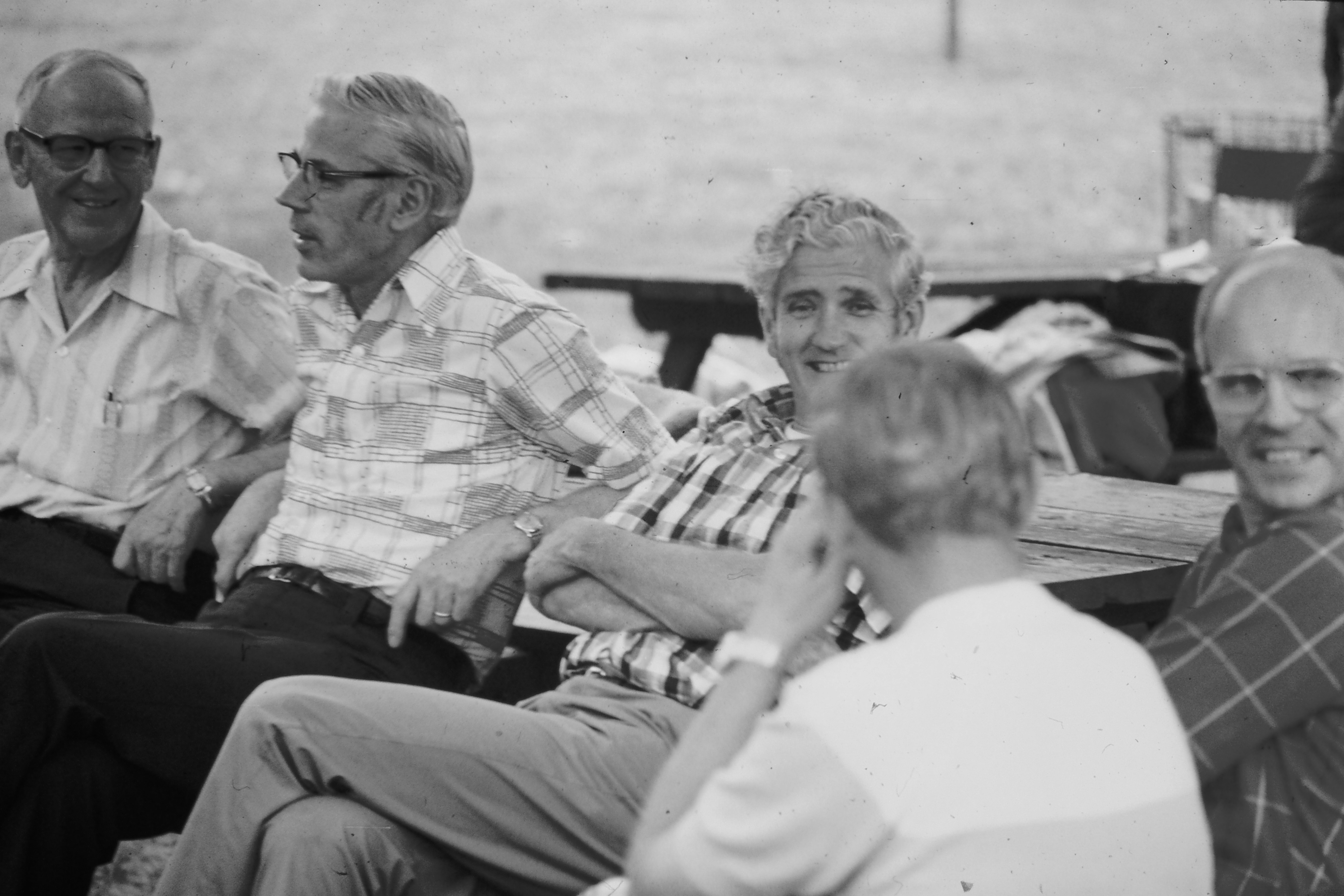
NJ CRC Pastors Internos 1974
Hawthorne Gospel
For the North Jersey CRCs it was Hawthorne Gospel. They were the non-denominational mega church before we talked about these things. They had the Christian bookstore in the area that we would go to, book and trinkets with Bible verses or catchy church-signy slogans.
The way people talked you could hear the tension in the conversation. Back in the 70s the dozen or so CRCs still felt vital. After the War (“the big one” as Archie Bunker used to call it) CRCs began to move their homes and their church buildings further away from Paterson and Prospect Park out to Wychoff and North Haledon. The old Eastern Academy building became the Jr. High and the ECSA built the High School, Midland Park School and the Wychoff school, all of which I attended after one year in Kindergarten at old North Fourth Street.
What did Hawthorne Gospel have that the CRC didn’t have? Really the question was what did they NOT have. They didn’t have the Catechism. They didn’t have Dutchy attitudes. They were streamlined, American, modern, successful at winning souls, hipper in their musical selection, available to whatever new adaptation needed to be made to win people to Christ. They were evangelical!
From Confessional Covenant to Bible-based
After my post on Saturday I reread the last two chapters of James Bratt’s history of Dutch Calvinism in Modern America. He leaves off his history in the 1970s, about the time when I became old enough to have some awareness of the CRC in New Jersey and the trends underway. Prior to “the big one” CRC factions were shaped by fault lines in the immigrant communities. As the United States went from isolation to empire through the Second World War so the CRC likewise had to get on board with agendas bigger than her own. Her youth fought for the Americans around the world. Television and magazines helped to shape a national culture and a national conversation. (Check out George Marsden’s book on American Cultural changes in the 50s and 60s.) The broader cold war changed the CRC in ways she didn’t realize at the time.
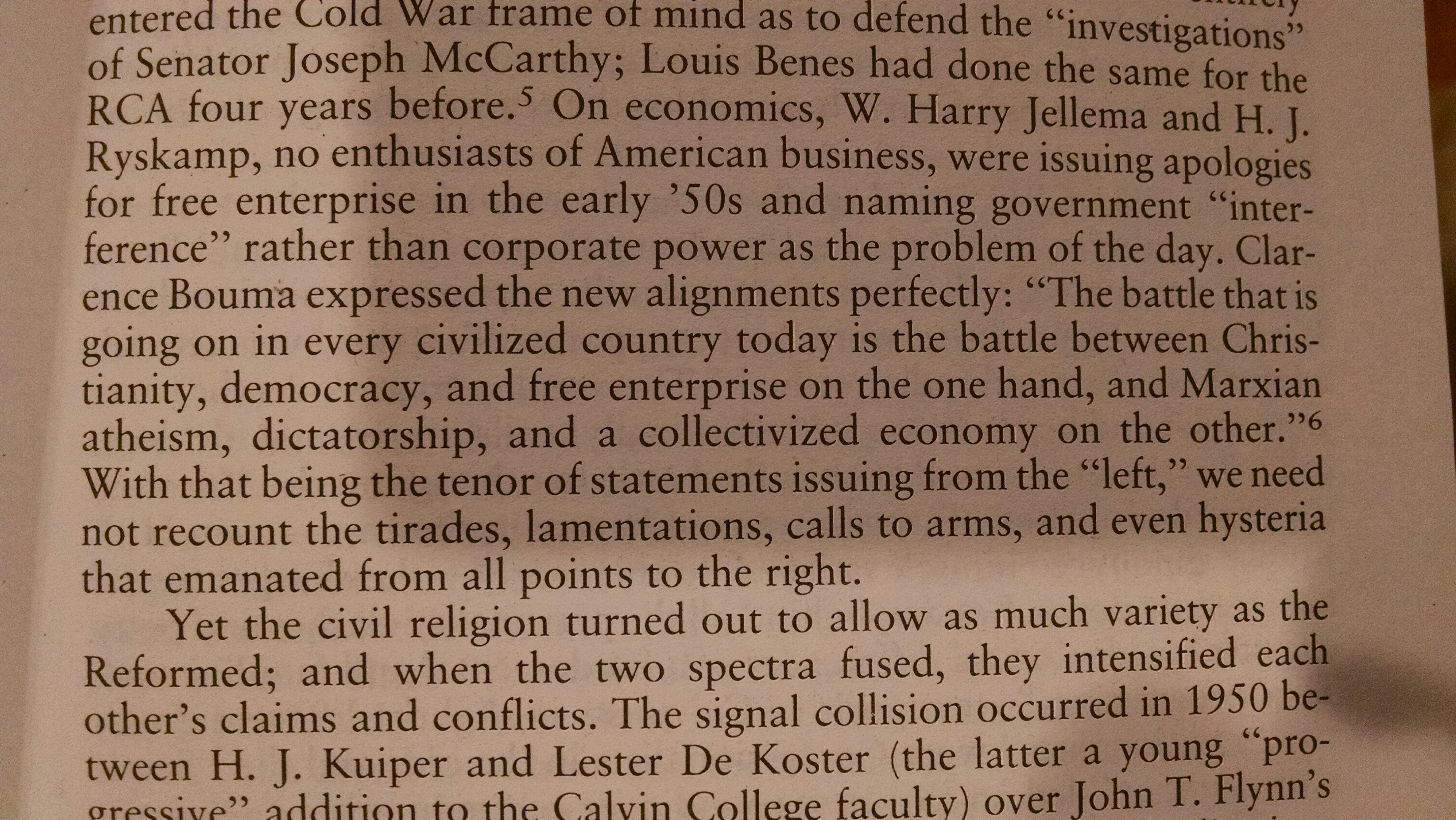
Dutch Calvinism in Modern America
The prior entrenchments of the first half of the century seemed as pointless as the French Maginot line in World War II. Younger CRC folks felt like the CRC was geared up for an old war on another continent. Hawthorne Gospel showed the way of the new world and the CRC had better get with the program or be left behind. It was conventional wisdom that the CRC was always 20 years behind. This attitude would reign for the rest of the century.
From Hawthorne Gospel to Willow Creek
Christian Reformed Home Missions would be the vehicle to help the church reach 400,000 by 2,000. My father was on the Home Missions board at the time and I remember him coming back from the board meetings in Grand Rapids and him explaining to me how he thought it was right, after prayer and careful deliberation, for the church to take the step of identifying a numerical goal for it to make.
I probably looked at him like a cow looks at a new gate. I didn’t understand the significance of the decision or even really care about it. I doubt they did. That’s how it is with most of our decisions.
Modernity had come to the CRC. We thought we could reconcile our confessional heritage with the modern ethos of formula, planning, and control, even when it came to “winning souls for Christ”.
My father of course could feel the difference between the hegemony of the pre-modern CRC with the new church his generation was now building.
Our RCA cousins of course had shown the way with Robert Schuller in Garden Grove California, golden state of Disney and all that is modern. Product of Hope College, Western Seminary and innovator in television ministry, the drive-in church and builder of the Crystal Cathedral. Home Missions sponsored groups of pastors to pilgrimage to Southern California to “find a need and meet it”.
CRC pastors of course had scruples about some of Schuller’s “positive thinking” notions, but those could be sidestepped and his ministry methods duplicated in pursuit of the planned for, hoped for results.
The Schuller junket would be replaced a decade later for a shorter trip to Barrington IL. Bill Hybels wasn’t a cousin, he was a son. He embodied the critique of the “too muchness” of the CRC, had the guts to leave it all together and really do it right. He created a safe place to hear a dangerous message. When I first got to Sacramento in August I was told I’d be attending this conference in Chicago to a church I had never heard of, being a rube just having left the Dominican Republic.
We had a special sidebar session with Bill himself where he’d mention his CRC roots, soften some of the harsher contrasting things he’d said in his church planter bio, and express his appreciation for some of what the CRC had given him and welcome us to learn how to make fully devoted followers of Jesus Christ.
Bill Hybels was the incarnation of wistful attraction to Hawthorne Gospel I had heard in my youth.
Short Trip from Confession to Bible Church
The Americanization of the CRC came late but followed the route of many others who had made this trip. Mark Noll brings this out.
In the effort to build churches with forms and assumptions that fit the new American nation, most of Europe’s traditional authorities came under severe attack. The great exception was the Bible. Passages from Scripture had been invoked everywhere during the Revolution, though often in symbolic ways (like referring to the British Parliament as “Egypt” and George Washington as “Moses”) rather than in deciding whether the Revolution was a just war. In the early republic, the great engine of the revival preaching that proved so successful for Methodists, Baptists, and many others was the Bible. Scripture was preached by itinerants and by regular clergy; it was the basis for organizing churches on the frontier and maintaining stability in settled regions. In the absence of well-developed social institutions or government structures, the King James Version of the Bible was the closest thing to a universal cultural authority. And because the Bible was the people’s book, which all who could read might appropriate for themselves, it almost completely escaped the suspicion that fell upon the other mainstays of historical European Christianity.
It is important to restate the sequence that undergirded the attitudes that took firm hold in early American history. Conventions in biblical interpretation were not worked out in academic isolation but were agents of tremendous public power forged in the crucible of practical necessity. A democratic, populist, and literal hermeneutic was the interpretive strategy that evangelical Protestants exploited to win the new republic for Christ. The social transformation that resulted seemed to validate the evangelicals’ approach to Scripture. For reaching the unreached with the Christian message, for organizing congregations and building churches, for creating agencies to construct and reform society, reliance on the Bible alone, literally interpreted, worked wonders.
Conservative CRC folk could find themselves in this Bible community. Yesterday I looked up a couple of churches where my grandfather had served, one of them in West Sayville Long Island. I discovered there was no longer a CRC church there, it was URC, but the name caught my attention, West Sayville Reformed Bible Church.
If you follow the trend lines the turn of the URC as it did makes perfect sense. It is another expression of Americanization. Michael Horton would replace Cornelius Van Til.
If you’re developing a taxonomy of CRC factions the boomer evangelicals need their own chapter. If the CRC had to fit in or explain itself to a world that didn’t understand two word last names it could pass for evangelical. When it became institutionally anxious it could learn how to do screens and praise teams from Hybels and Warren.
Church Karma
Why should the demographic that claimed to invent the generation gap feel upended by their emergent children?
A breakout option on the Willow Creek tour was visiting their new “Gen X” ministry. Surely the business smarts that built the un-denominational Willow Creek Association could with sociological savvy construct a safe space for the next generation to hear a dangerous message.
Bill put the church in a space that looked like a community college but the college kids would, as their parents had demanded of their parents, find their own space, and more importantly tinker more with message than Bill had ever done. Funny how we do what they do and not what they say.
Part of the safety of Hybel’s approach was that evangelicals could feel secure that the “principles” had stayed the same. You could have a jazz prologue and a showtime performance of spiritual songs done with “excellence” but the same conversionism built on the Roman Road or the Four Spiritual Laws remained the same. The Bible, after all, was under it all, just like at the Hawthorne Gospel just off the Interstate by you.
Meeting the RCA in Evangelical Land
CRC and RCA sitting in a tree. KISSING. We’ll see what comes next.
It’s an American tree and the Gideons have left a Bible leaning against the roots.
The RCA West did the Schuller thing in ways the CRC never dared. Not too long ago the RCA was able to sell its drive in ministry space to developers to devote the money to church planting. I won’t tell the RCA’s story with Schuller in California but leave that to those who know it. What I do know is that their experience with evangelicals, or even more AS evangelicals is different from the CRC experience.
There was something enduring in CRC culture that won’t fully let the boomers go. While many can find another church, start another church, or leave church all together, other parts of them just can’t let the CRC stuff go. I see this all the time in ex CRC and even post-Christian boomers. For Paul Schrader it was obvious in Hardcore but more subtle in Mosquito Coast. What did he see in Kazantzakis’ Christ?
The boomer pastors of the CRC and RCA are retiring. Ex-ers employed the term “evangelifish”. Understanding the Gospel narrowly and sellably as a way to make it to heaven and avoid hell is felt by many to be spent propaganda reduction.
How could the CRC know that the ethos that led her to embrace 400,000 by 2000 would also send 40,000 to a new “affiliation” that felt itself more faithful to “the Bible”. It felt both more faithful to their roots and more at home with their American Bible church cousins. Might as well put it in on the front sign.
Will close contact with the evangelical RCA wing invite the CRC to “what’s working today” or will it trigger the people who followed the dairy cow to America to resist the hand that tries to lead?


 Leadingchurch.com
This is good…. this is really good.
Pingback: 20th Century Voices in the CRC: The Civil Rights Strain and the New Morality | Leadingchurch.com
Paul, thanks for your insight into contemporary CRC culture.
Pingback: Rob Bell as Gateway Drug, but in which direction? | Leadingchurch.com
For a really fine discussion of this you’ll have to join CRC Voices. https://groups.yahoo.com/neo/groups/crc-voices/conversations/topics/102763
Voices, like the CRC has isolationist streak. To join is free. There are no requirements, but like a small church, benefiting from it requires investing in it.